

Natural ingredients are hardly new to animal nutrition. Herbs, flowers, roots and leaves have been used in feeds and complementary products for generations, but the way they are specified, presented and marketed continues to evolve.
For manufacturers, botanicals can combine an established history of use with practical formulation characteristics such as colour, texture and versatility.
Here are five botanicals currently worth watching.
1. Cornflower – Centaurea cyanus
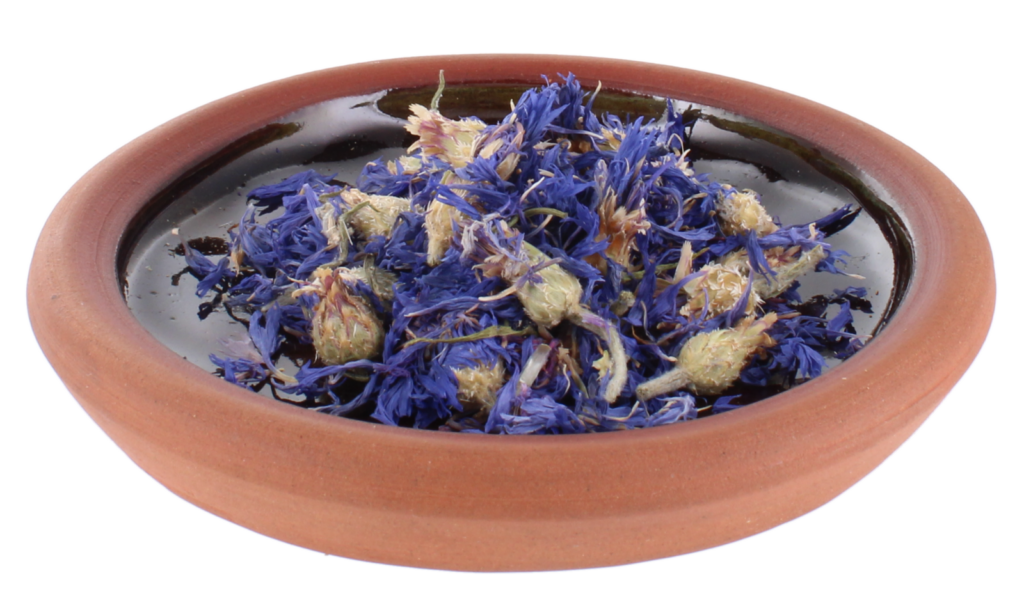
Few botanical ingredients provide quite the same visual impact as blue cornflower.
The intense blue petals make cornflower particularly interesting for manufacturers of products where the raw ingredients remain visible, from equine herbal blends and forage products to premium complementary feeds.
This matters because botanical ingredients increasingly have a role to play in the presentation of a formulation as well as its composition. A product containing identifiable leaves, petals and flowers immediately communicates something different to the customer from a homogenous powder or pellet.
Cornflower also has a long history of use. Its edible petals have traditionally been used to bring natural colour to food and drink products, while the plant has applications across cosmetic and botanical markets.
Joseph Flach & Sons currently sources blue cornflower from Europe and supplies Centaurea cyanus as both whole blue cornflowers and whole blue cornflower petals. Different forms and grades are available across our wider botanical range, which can be important when matching a raw material to a particular manufacturing process or finished-product appearance.
For animal nutrition manufacturers, its strength is straightforward: cornflower is recognisable, naturally colourful and particularly effective where the botanical identity of the formulation is intended to remain visible.
2. Red Clover Flowers – Trifolium pratense
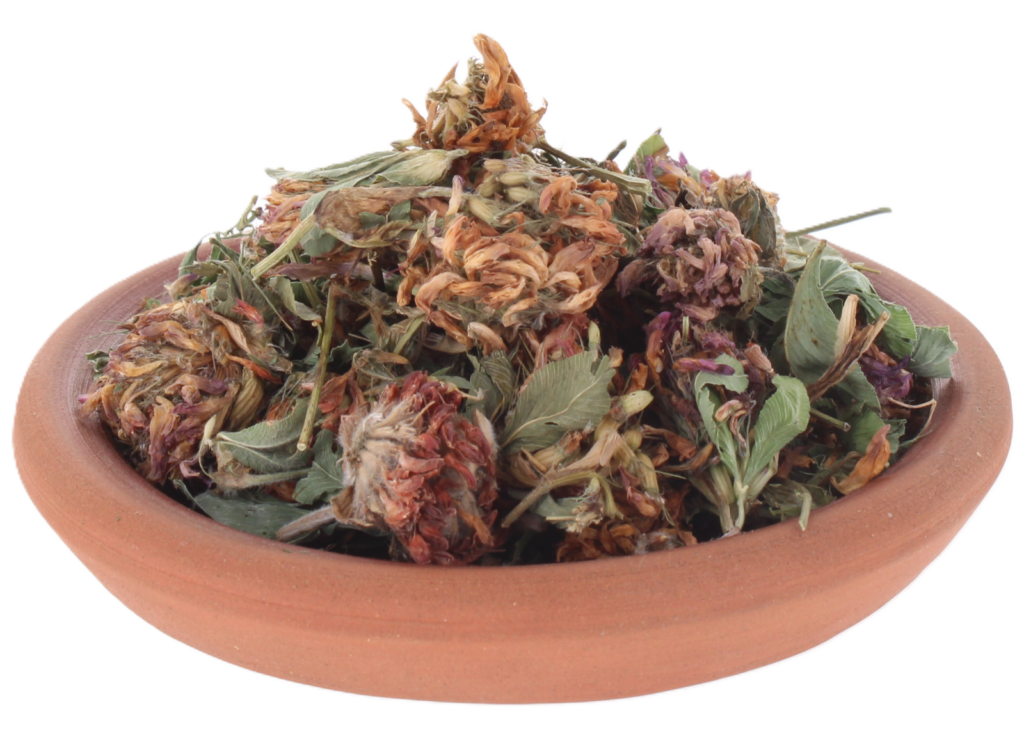
Red clover is instantly associated with lush green fields and pasture, which gives it an obvious connection with equine and grazing-animal products.
Rather than being an unfamiliar botanical that requires explanation to the end customer, clover is something most horse owners already recognise. That familiarity can be valuable in forage blends, complementary feeds and botanical formulations built around meadow or pasture ingredients.
Red clover also has a long history of traditional use beyond animal nutrition. As with many botanicals, however, historical use should not be confused with an authorised nutritional or health claim for a finished feed product.
For manufacturers, the more practical considerations are often the quality of the dried flower, consistency between batches, origin and the specification required for the intended formulation.
Joseph Flach & Sons supplies dried red clover flowers sourced from Europe, with product specifications available to customers on request.
3. Dandelion – Taraxacum officinale
Dandelion is perhaps one of the best examples of an everyday plant becoming a commercially useful botanical raw material.
Far from being simply a garden weed, Taraxacum officinale is known to contain a range of naturally occurring plant compounds and nutrients. The leaves are known to contain vitamins, minerals and antioxidants, while the root contains compounds including sesquiterpene lactones, coumarins and triterpenes. It also offers manufacturers considerable choice in terms of format.
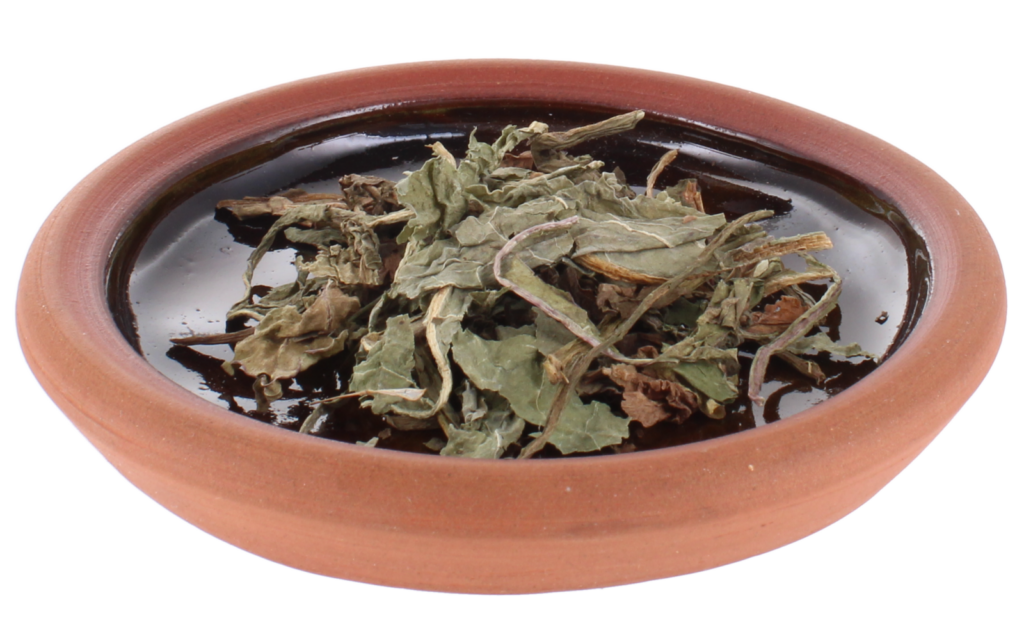
The Joseph Flach & Sons range includes whole dandelion leaf, herb powder, whole root, root powder and other cut or processed formats. Depending on the product, material is sourced from Europe and Asia.
That versatility is useful. A visible cut herb has a very different role within a coarse equine blend from a powder intended to be incorporated more evenly into a formulation.
Dandelion has an established presence in the equine market. Joseph Flach & Sons’ dandelion root powder, for example, can be supplied in accordance with animal-feed accreditations and with heat treatment where required.
For manufacturers, this highlights an important point: choosing a botanical is not simply a question of deciding which plant to use. Plant part, cut size, processing, specification and intended application all matter.
4. Nettle – Urtica dioica
Nettle has a similarly strong connection with traditional plant use, but from a formulation perspective it is also a versatile raw material.
Urtica dioica is known to contain naturally occurring fibre, vitamin C, iron and a range of plant compounds. Once dried and processed, it can be supplied in forms suitable for very different applications.
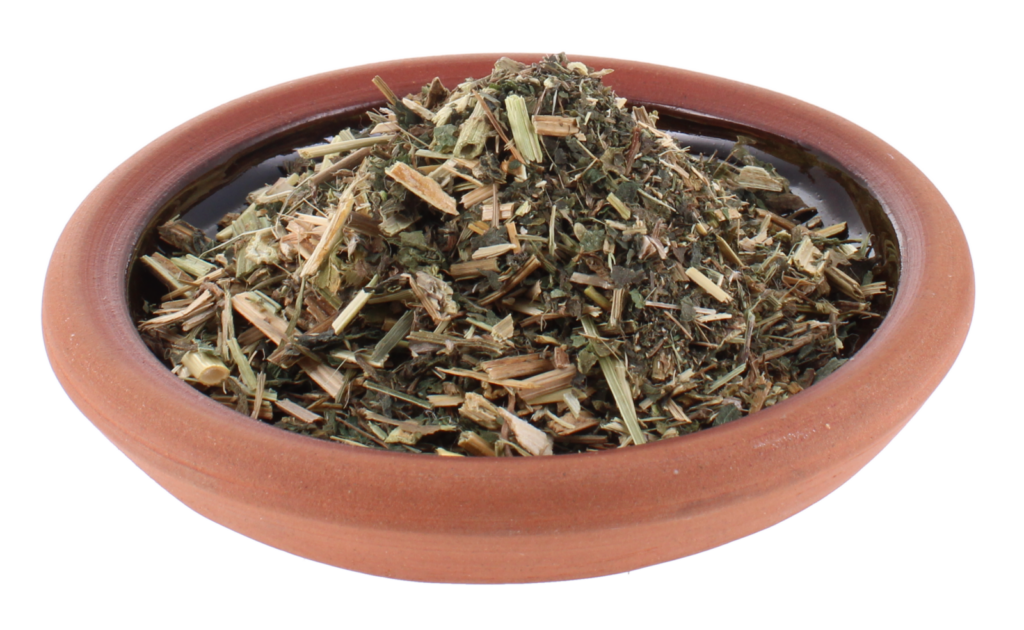
Joseph Flach & Sons supplies nettle as cut herb, whole leaf and powder, while organic options are also available for certain nettle products. Our nettle is sourced from Europe.
Within an equine or animal nutrition formulation, cut nettle brings a recognisably leafy, green appearance. Powder offers manufacturers a different option where a finer and more evenly dispersed ingredient is required.
Manufacturers are not simply selecting an ingredient by name; they also need to consider how that ingredient behaves within the finished product, how it affects appearance and consistency, and whether the available specification fits their production requirements.
5. Rose Petals – Rosa spp.
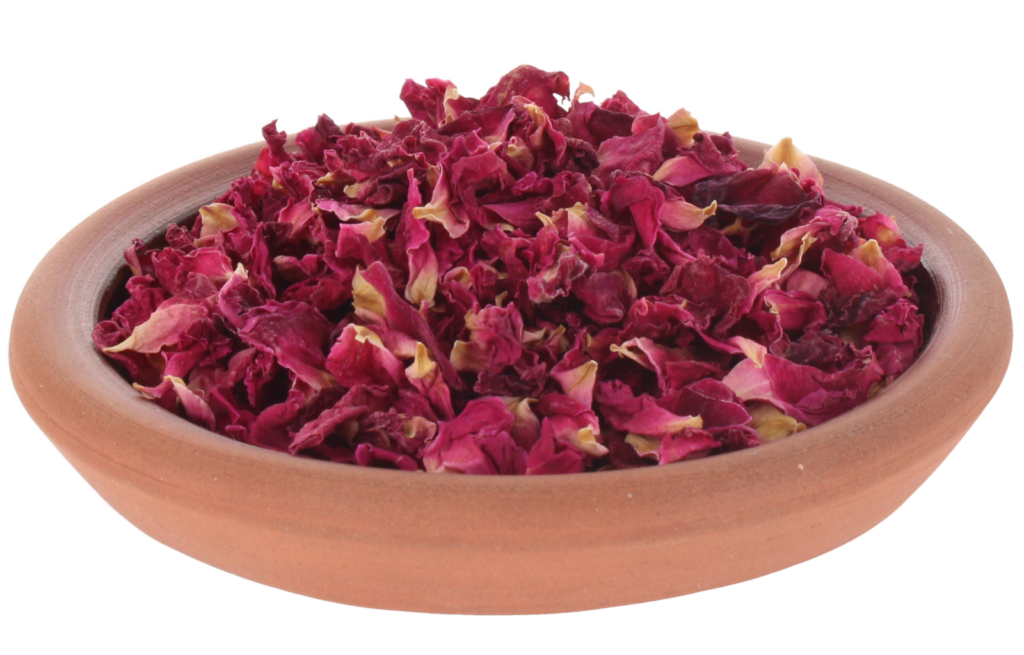
Rose may be better known in food, tea and cosmetics, but its characteristics also make it interesting in premium botanical animal products. The attraction is immediately obvious, colour.
Dried rose petals can introduce a visible botanical element into a formulation without the need for artificial colour, helping manufacturers create products with a distinctive, premium appearance. This can be particularly effective when rose is combined with contrasting green herbs and blue or yellow flowers in an equine or complementary feed blend.
Rose also has a long history of botanical use, stretching across culinary, cosmetic and traditional herbal applications.
Joseph Flach & Sons supplies whole red rose petals as well as red rose petal powder, with current material sourced from Asia.
Again, the form matters. Whole petals provide colour and visual identity; powder offers a very different ingredient format for manufacturers requiring greater integration within a formulation.
Specification Matters as Much as Species
Two ingredients carrying the same common botanical name are not necessarily interchangeable.
The plant part, botanical species, country of origin, cut size, processing method and specification can all affect how a material performs in manufacturing. This is why our conversations with animal nutrition customers frequently go beyond simply asking, “Do you stock nettle?” or “Can you supply dandelion?”
A manufacturer may need a powder rather than a cut herb. Another may deliberately want recognisable pieces of leaf or flower in the finished product. Some applications may require additional testing, certification or treatment.
Joseph Flach & Sons has access to accredited testing laboratories where appropriate, and Certificates of Analysis and product specifications can be provided to help customers assess materials against their own requirements. We can also offer Organic, Kosher and UFAS-accredited products where appropriate.
Why Are Botanicals Attracting Attention?
The wider market gives some context to what we are seeing.
Premiumisation remains an important feature of the European pet-care market, alongside greater interest in ingredient transparency and more specialised nutrition. Market research has also identified demand for high-quality, natural and functional ingredients as part of this shift.
For manufacturers, however, this is about more than identifying the next fashionable ingredient. A botanical must work commercially.
That means asking practical questions: Is the material consistently available? Is the required cut or grade available? What is its country of origin? Can the supplier provide the appropriate specification and documentation? Is additional testing required? And, crucially, is the ingredient appropriate for its intended application and the claims being made about the finished product?
These considerations become even more important when moving from a small product trial to repeat commercial production.
Building Resilience Into Botanical Supply
Availability also deserves consideration early in the development process.
Botanicals are agricultural products. Harvests, weather, crop quality and geographical availability can change from one season to another. A formulation that depends upon a very specific botanical, origin or grade therefore needs a sourcing strategy behind it.
For manufacturers developing new animal nutrition, equine or pet-care products, involving the botanical supplier early can therefore be valuable. It provides an opportunity to discuss not just the ingredient itself, but the form, origin, specification, likely volumes and any particular technical requirements before the formulation reaches commercial scale.
From Familiar Plants to Commercial Ingredients
Cornflower, red clover, dandelion, nettle and rose are not new botanicals. In fact, their familiarity is part of their appeal.
What is changing is the market around them. As manufacturers explore premium formulations, clearer ingredient communication and natural product positioning, recognisable botanical ingredients have an interesting role to play.
For manufacturers, the opportunity lies in using them intelligently: choosing the right botanical, in the right form and to the right specification, while ensuring that supply, quality and regulatory requirements have been considered from the outset.
At Joseph Flach & Sons, we supply plant products, herbs and spices for animal nutrition applications ranging from horse feed to pet food, with experience sourcing botanicals stretching back to 1882.
Today, we work with growers and suppliers around the world to source botanicals in bulk for manufacturers across a wide range of industries. Where appropriate, we work with customers on specifications, testing and documentation, while our established supplier network helps us manage the realities of sourcing agricultural raw materials.
Joseph Flach & Sons supplies botanicals in wholesale quantities to manufacturers across the animal nutrition sector. Our range includes plant products, herbs, flowers, roots, spices and other botanical raw materials, with product specifications available on request.
Developing an equine, pet-care or animal nutrition product? Speak to our team at sales@josephflach.co.uk or call +44 (0)1733 371221 to discuss your botanical requirements, including available forms, specifications, testing and bulk supply.

